

What Causes Engine Warning Light to Come On?
You turn the key, the dash lights up, and one light stays on longer than it should. If you’re wondering what causes engine warning light issues, the short answer is this: your vehicle’s computer has picked up a fault somewhere in the engine, fuel, ignition, emissions or sensor system. Sometimes it is minor. Sometimes it is the first sign of a problem that can leave you stranded.
That is why the engine warning light should never be brushed off for days or weeks. A vehicle can still seem to drive normally while storing fault codes in the background. By the time rough running, poor fuel economy or hard starting show up, the repair bill can be a lot bigger than it needed to be.
What causes engine warning light problems most often?
The engine warning light, also called the check engine light, comes on when the ECU detects something outside normal range. The ECU is basically the vehicle’s control unit. It monitors data from sensors across the engine and related systems and flags faults when readings do not line up.
One of the most common causes is a sensor issue. Modern vehicles rely on sensors to measure air intake, exhaust gases, coolant temperature, crank position and more. If one sensor fails or gives an inconsistent reading, the ECU may trigger the light even if the engine still runs.
Ignition faults are another regular culprit. Worn spark plugs, failing ignition coils or poor combustion can cause misfires. In a petrol vehicle, a misfire may show up as a slight shudder at idle, sluggish acceleration or a flashing engine warning light under load. That flashing light matters because it can point to an active misfire severe enough to damage the catalytic converter.
Fuel system faults also cause plenty of warning lights. A blocked injector, weak fuel pump, dirty throttle body or incorrect air-fuel mixture can all trip a fault. Diesel engines have their own set of likely causes as well, including injector issues, EGR faults and problems with diesel particulate systems.
Then there are emissions-related problems. Faulty oxygen sensors, catalytic converter issues, evap leaks and carbon build-up can all trigger the light. In some cases, the car still feels fine, but emissions systems are sensitive and the ECU will log even a small deviation.
The difference between a steady light and a flashing light
Not every engine warning light means the same level of urgency. A steady light usually means a fault has been detected, but the vehicle may still be safe enough to drive for a short period while you arrange a proper diagnostic. That does not mean ignore it. It means deal with it promptly before the issue snowballs.
A flashing light is more serious. That often points to a severe misfire or another fault that can cause immediate damage if you keep driving. If the light is flashing and the vehicle is running rough, lacking power or making unusual noises, pull over somewhere safe and switch it off. Driving on can turn a manageable repair into a major one.
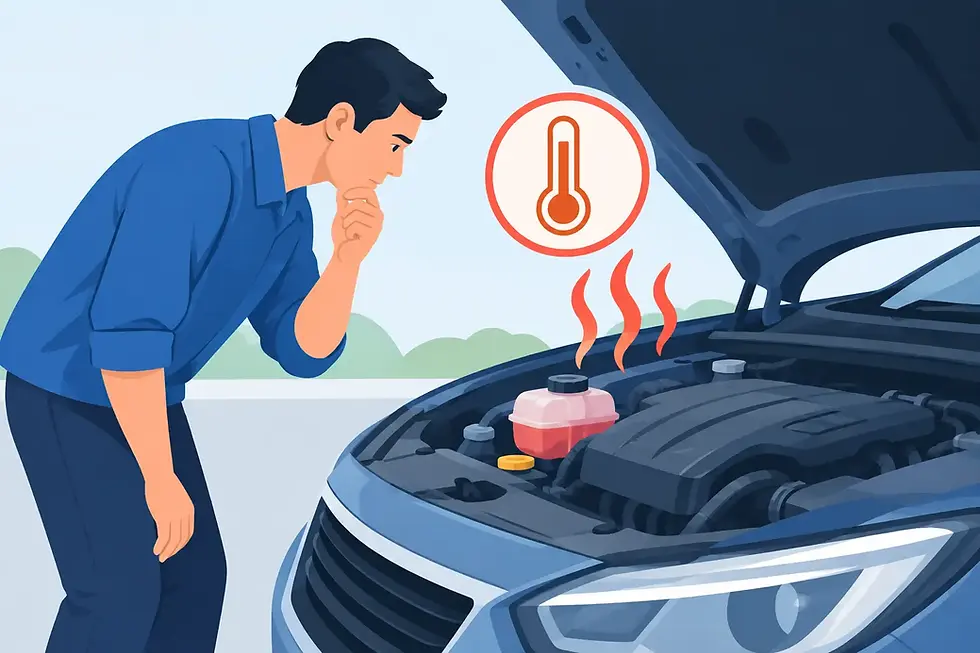
The same goes if the engine warning light appears alongside overheating, oil pressure warnings, heavy smoke, stalling or harsh knocking. At that point, it is no longer just a warning light issue. It is a mechanical risk.
What causes engine warning light to come on when the car feels fine?
This catches a lot of drivers out. The vehicle starts, idles and drives without any obvious drama, but the light is on. That can happen because many faults begin as performance or emissions deviations too small to feel from the driver’s seat.
For example, an oxygen sensor may respond too slowly, a thermostat may not regulate temperature correctly, or a minor evap system leak may be detected. None of those always create instant drivability symptoms. But the ECU notices the readings are off and stores a code.
This is where proper diagnostics matter. Reading the fault code is the starting point, not the whole answer. A code tells you where the system saw a problem, but not always which part has definitely failed. Replacing parts based on guesswork can waste money fast.
Common faults behind the light
In day-to-day mechanical work, a few faults come up again and again. Spark plugs and ignition coils are common on petrol vehicles, especially when servicing has been stretched out. Oxygen sensors and airflow sensors also fail regularly over time. Vacuum leaks can trigger lean-running faults. Dirty throttle bodies can affect idle and air control.
On diesel vehicles, EGR valves, boost leaks, injector faults and DPF-related issues are frequent causes. If the vehicle is used mainly for short trips, the DPF may not get hot enough for proper regeneration. That sort of driving pattern can contribute to repeated warning lights.
Battery and charging problems can also confuse modern systems. Low voltage can cause modules and sensors to behave oddly, which may trigger warning lights that seem unrelated at first glance. That is why a solid diagnostic process checks the basics as well as the stored codes.
A loose or damaged fuel cap can even be the cause in some vehicles, although people often assume the worst straight away. The point is that the light can come on for anything from a simple sealing issue to a serious engine fault. You do not know which one you are dealing with until it is tested properly.
Why cheap code scans do not always solve it
A lot of parts shops and generic scan tools can pull a fault code. That can be useful, but it is not the same as a diagnostic inspection. The code might say there is a lean condition, for example, but the actual cause could be an intake leak, a weak fuel pump, a sensor fault or injector trouble.
Good diagnostics involve checking live data, looking at fault history, inspecting wiring and connectors, testing components and matching all of that with the symptoms. That is how you avoid replacing a sensor just because the code mentioned it, only to find the real issue was elsewhere.
For owners of 4x4s, diesels, trucks and marine motors, that matters even more. These systems can be more complex, and downtime costs more than just inconvenience. If your work ute or truck is off the road, or your boat motor lets you down at the wrong time, guessing is expensive.
Can you keep driving with the engine warning light on?
It depends on how the vehicle is behaving. If the light is steady and the car is driving normally, you can usually drive it cautiously for a short time to get it checked. Keep an eye out for rough running, power loss, overheating, unusual smells or increased fuel use.
If the light is flashing, or the engine is misfiring, shaking, overheating or struggling badly, stop driving if it is safe to do so. Continuing on can damage the catalytic converter, engine internals or turbo components depending on the fault.
This is where plain-English advice helps. You do not need scare tactics, but you do need a realistic call on whether the vehicle is safe to move or whether it needs on-site attention or towing.
How to reduce the chance of the light coming on
You cannot prevent every fault, but regular servicing gives you the best chance of catching wear before it triggers a warning light. Fresh plugs, clean filters, proper fluid checks and routine inspections help sensors, ignition and fuel systems work as they should.
Driving habits matter too. Constant short trips can be hard on batteries, emissions systems and diesel particulate filters. Ignoring rough starts, poor idling or a drop in fuel economy also gives small issues time to become bigger ones.
Quality parts make a difference as well. Cheap aftermarket components can create repeat faults, especially with sensors and ignition parts. Saving a few dollars up front can cost more in repeat labour and unreliable performance.
When to book a diagnostic
If the engine warning light stays on, comes back after being reset, or appears with any change in performance, book a diagnostic sooner rather than later. The same applies if the vehicle starts harder than usual, stalls at lights, smokes, uses more fuel or feels flat on hills.
A proper diagnostic should give you more than a code number. It should tell you what is happening, what needs testing next if the cause is not immediately obvious, and whether the vehicle is safe to keep using. That is the practical value of calling a mechanic who can explain the issue without burying you in jargon.
For drivers across the Gold Coast and Brisbane, convenience matters too. If the warning light is on and your day is already packed, having a mobile mechanic come to you can take a lot of the hassle out of dealing with it. At Hope Automotive, that is exactly how we approach it - find the fault properly, explain it clearly, and get you back on the road without the workshop runaround.
An engine warning light is not always a disaster, but it is always worth taking seriously. The sooner you know what triggered it, the better your chances of fixing a small problem before it turns into a breakdown, a tow, or a much larger repair bill.


Comments