

A Guide to Preventative Car Maintenance
That flat battery at 6:30 on a workday, the overheating warning halfway through school drop-off, the brake noise you meant to get checked last month - most big repair bills start small. A solid guide to preventative car maintenance is really about catching those small problems early, before they leave you stranded or turn a simple service into a major repair.
For most drivers across the Gold Coast and Brisbane, preventative maintenance is less about being car-obsessed and more about keeping life moving. Whether you drive a family SUV, a diesel ute, a 4x4, a work vehicle or something that only comes out on weekends, regular checks save money, improve safety and cut down the chance of inconvenient breakdowns.
What preventative car maintenance actually means
Preventative maintenance is the routine servicing, inspections and minor repairs that keep your vehicle in good working order. It covers the basics like engine oil, filters, tyres and brakes, but it also includes checking the systems that wear gradually over time, such as suspension, belts, batteries, cooling components and steering.
The main point is simple. You fix wear and tear before it turns into failure. That could mean replacing brake pads before they damage the rotors, spotting a coolant leak before the engine overheats, or testing a battery before it gives up in a shopping centre car park.
This approach is usually cheaper than reactive repairs, but there is some balance involved. Not every part needs replacing early, and not every noise is a disaster. Good maintenance is about timing, not throwing parts at a vehicle for the sake of it.
A practical guide to preventative car maintenance
The best maintenance plan is based on how you use the vehicle, not just what the logbook says. A car doing short suburban trips has different needs from a diesel ute towing gear every week. A 4x4 that sees beach runs or bush tracks will need closer attention again.
That said, there are a few core areas every owner should stay on top of.
Engine oil and filters
Fresh engine oil protects moving parts, reduces heat and helps keep the engine clean. Leave it too long and the oil breaks down, gets contaminated and stops doing its job properly. That can lead to increased wear, sludge build-up and eventually serious engine trouble.
Oil and filter intervals vary between vehicles, oils and driving conditions. If you do a lot of stop-start driving, towing or short trips, your engine may need more frequent servicing than the maximum interval listed by the manufacturer. This is one of those areas where "it depends" matters.
Air filters and fuel filters also play a part. A blocked air filter can affect performance and fuel economy, while a neglected fuel filter can create drivability issues, especially in diesel vehicles.
Cooling system checks
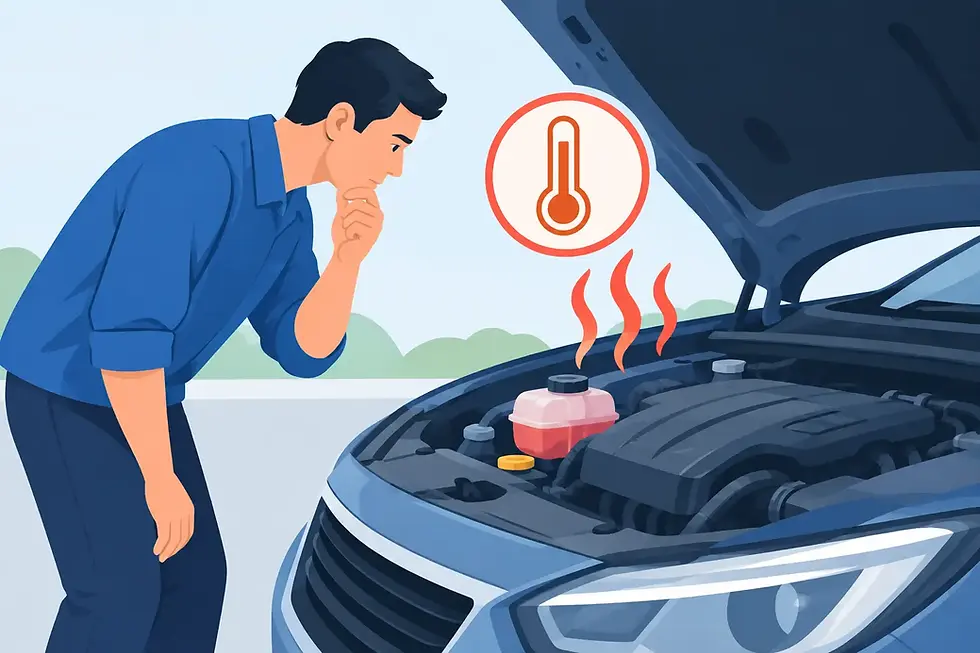
Queensland heat is hard on cooling systems. Hoses, radiators, thermostats, water pumps and coolant all need to be in proper condition if you want to avoid overheating.
A lot of people only think about coolant when the temperature gauge climbs, but by then the risk is already high. Low coolant, old coolant or a small leak can quickly become an expensive engine problem. If your vehicle is running hotter than normal, losing coolant or leaving marks where you park, get it checked early.
Brakes and tyres
Brakes and tyres are basic safety items, but they are also areas where gradual wear is easy to ignore. Brake pads wear down over time, rotors can score or warp, and brake fluid absorbs moisture as it ages. Tyres can look acceptable at a glance while still being unevenly worn, underinflated or close to replacement.
Poor tyre condition affects braking distance, handling and fuel use. Uneven wear can also point to suspension or alignment issues. With brakes, squealing is not always urgent, but grinding usually means you've waited too long.
Battery and charging system
Batteries often fail without much warning, especially during hot weather. If your vehicle is slow to start, electrical systems are acting strangely or the battery is a few years old, testing it before it fails is smart maintenance.
It is also worth checking the charging system. Sometimes the battery gets blamed when the real issue is the alternator, poor connections or parasitic drain.
Belts, hoses and fluids
Drive belts, radiator hoses and fluid levels do not usually get much attention from owners, but they matter. A cracked belt or swollen hose can fail without much notice. Transmission fluid, brake fluid, power steering fluid and differential oils all have service lives as well, depending on the vehicle.
Some modern gearboxes are marketed as low-maintenance or sealed, but that does not always mean fluid lasts forever in real-world Australian conditions. If you tow, carry loads or spend time in traffic, fluid condition matters more.
The maintenance items drivers often miss
One of the biggest mistakes is focusing only on oil changes. Oil services are important, but they are not the full picture.
Spark plugs, suspension bushes, wheel bearings, cabin filters, injectors, serpentine belts and engine mounts can all affect the way a vehicle runs and feels. On 4x4s and work vehicles, underbody wear, driveline components and steering joints deserve regular attention too. For boats and marine motors, preventative maintenance is even more important because salt, moisture and periods of sitting idle can cause problems quickly.
The smaller signs matter as well. Vibrations through the steering wheel, a pull to one side, a fuel smell, rough idling, sluggish acceleration or a knocking sound over bumps are not just annoyances. They are often the early warning signs that let you fix something before it gets worse.
Why regular servicing saves money
Some people put off servicing to save cash, which is understandable when life is busy and costs are up. But delayed maintenance usually costs more, not less.
A cheap hose can become an overheated engine. Worn brake pads can become damaged rotors. An ignored oil leak can ruin belts, mounts or sensors nearby. Tyres worn out by poor alignment do not just need replacing sooner - they may also be hiding suspension issues that keep chewing through the next set.
Preventative servicing also helps with resale value and reliability. A vehicle with a solid maintenance history is generally easier to sell, and for anyone using their vehicle for work, reliability is not a bonus. It is part of earning a living.
How often should you service your vehicle?
There is no single answer that suits every car, ute or diesel. The right interval depends on manufacturer recommendations, age, kilometres, driving conditions and what the vehicle actually does each week.
As a rough guide, many vehicles need servicing every 10,000 kilometres or every 6 to 12 months. But if you do heavy towing, frequent short trips, off-road driving, long idle periods or high-kilometre work use, shorter intervals are often the safer option.
If your vehicle is older, preventative maintenance becomes even more valuable. Older vehicles can be perfectly dependable, but they usually need a closer eye on seals, hoses, suspension, cooling components and electrical systems.
What a good mechanic should tell you
A proper preventative maintenance check should not leave you guessing. You should know what needs doing now, what can wait, and what to keep an eye on over the next service cycle.
That plain-English approach matters. Not every recommendation is urgent, and a good mechanic will explain the difference between a safety issue, a maintenance item and something that is worth monitoring. That helps you budget properly and avoid both panic and neglect.
For busy drivers, convenience matters too. If getting to a workshop means losing half a day, maintenance is easier to put off. That is why mobile servicing makes practical sense for a lot of households and work vehicles. Hope Automotive sees this every day - when servicing is easier to book and easier to get done, vehicles tend to stay in better shape.
A guide to preventative car maintenance that works in real life
The best maintenance routine is one you can actually stick to. Check your tyres and fluid levels regularly. Do not ignore warning lights, leaks or new noises. Book servicing based on real use, not wishful thinking. Keep records. Ask questions. If something feels off, get it looked at early.
You do not need to know every part under the bonnet to stay ahead of trouble. You just need a consistent approach and a mechanic who gives you honest advice without the jargon. A bit of attention now usually beats a tow truck later.


Comments