

Your Complete Guide to Mobile Diagnostics
That warning light appearing on the way to work does not always mean your vehicle needs to be dropped at a workshop for the day. This complete guide to mobile diagnostics explains what an on-site mechanic can check at your home, workplace or roadside, what the results really mean, and when a bigger repair is required.
Mobile diagnostics are about finding the actual cause of a fault before replacing parts. For Gold Coast and Brisbane drivers, that can mean less downtime, clearer answers and a practical plan to get the vehicle back on the road.
What mobile diagnostics actually involves
A mobile diagnostic service brings professional scan tools, test equipment and mechanical experience to the vehicle. The mechanic connects with the vehicle's onboard systems, checks fault codes, reviews live operating data and carries out physical tests where needed.
The scan tool is useful, but it is only one part of the job. A fault code points to the system that has noticed a problem. It does not always identify the failed part. For example, a code relating to an oxygen sensor may be caused by the sensor itself, damaged wiring, an exhaust leak or an engine issue affecting the fuel mixture.
A proper diagnosis combines the scan result with what the vehicle is doing in real conditions. Is it hard to start only when cold? Does the engine light come on under load? Has fuel use increased? Are there noises, smoke or fluid leaks? This information helps narrow down the cause instead of guessing.
What an on-site mechanic can check
Most common electrical, engine and drivability faults can be assessed where the vehicle is parked, provided there is safe access. This applies to passenger cars, utes, 4x4s, diesel vehicles, trucks and many marine engines.
A mobile mechanic can scan engine, transmission, ABS, airbag, body control and other fitted modules. They can check battery condition, charging voltage, starter operation, wiring connections, fuses, relays and sensor readings. Live data from the vehicle can show items such as coolant temperature, fuel pressure, air flow, injector operation, turbo boost and throttle position.
Physical checks matter just as much. A visual inspection may reveal a split intake hose, loose battery terminal, damaged wiring loom, oil leak, worn belt or coolant loss before more complex testing is needed. On diesel vehicles, diagnostics can also help investigate DPF warnings, EGR faults, boost problems and starting issues.
For 4x4 owners, the check may include electronic four-wheel-drive systems, transfer case controls, wheel-speed sensors and trailer wiring. Truck and marine faults vary by make and setup, but the same principle applies: test the system methodically and explain the findings in plain English.
A complete guide to the mobile diagnostic process
Start with the symptoms, not just the warning light
Before the diagnostic appointment, make a note of what has changed. The most useful details are when the fault started, whether it happens all the time or intermittently, what warning lights are showing and what work has recently been carried out.
Also mention whether the vehicle has been sitting for a while, recently towed a trailer, driven through deep water, run low on fuel or had a flat battery. These details can save time and may point directly to the likely cause.
Scan, test and confirm
Once on site, the mechanic will usually carry out a basic inspection and battery check before scanning the vehicle. Fault codes are recorded, along with freeze-frame data where available. Freeze-frame data captures vehicle conditions when the code was set, such as engine speed, temperature or load.
The next step is confirmation. Depending on the fault, this may involve checking voltages, continuity, pressures, sensor signals or mechanical condition. A road test may also be useful if the vehicle is safe to drive and the problem occurs while moving.
This is where experience makes a difference. Clearing a code may turn off a warning light temporarily, but it does not fix the reason it appeared. The goal is to identify whether the fault is current, intermittent, historic or caused by another issue.
Receive a clear repair plan
After testing, you should be told what has been found, what still needs investigation and what repair options are available. Some faults can be repaired on the spot, such as a battery replacement, loose connection, damaged hose, failed sensor or minor service-related issue.
Other repairs may need parts ordered, more time or workshop equipment. A good mobile mechanic should be upfront about that rather than promising an instant fix for every problem.
Common faults mobile diagnostics can help identify
An engine light is the obvious reason to book diagnostics, but it is not the only one. A vehicle that cranks but will not start, stalls at lights, misfires under acceleration or feels down on power can all benefit from testing before parts are replaced.
Battery and charging problems are another common callout. If the vehicle is slow to crank, repeatedly goes flat or shows a battery warning light, the battery may not be the only issue. The alternator, terminals, earth connections or a parasitic electrical draw could be involved.
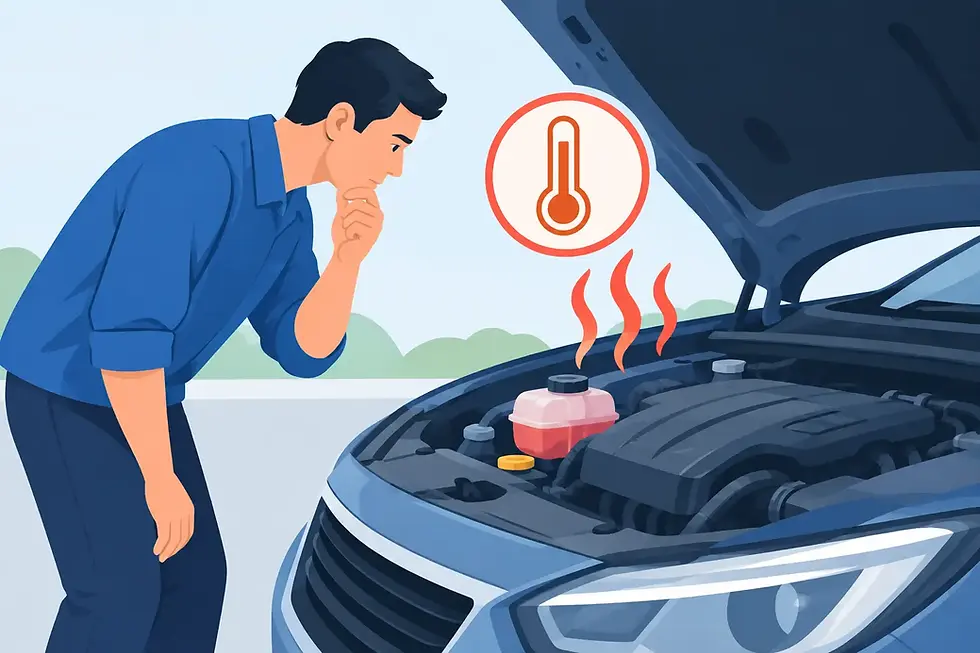
Overheating needs prompt attention. A temperature warning, coolant smell, steam or dropping coolant level can be linked to leaks, fans, thermostats, water pumps, sensors or more serious engine concerns. Do not keep driving and hope it settles down.
Modern vehicles can also report faults in safety systems. ABS, traction control and airbag lights should be inspected rather than ignored. The vehicle may still drive, but some safety functions may not work as intended.
When mobile diagnostics may not be enough
Mobile service is highly effective, but it has practical limits. Major internal engine work, transmission rebuilds, wheel alignments, machining and repairs requiring a hoist are normally better handled in a workshop.
Some intermittent electrical faults need extended testing over several days. Certain manufacturer programming tasks may require dealer-level access or a stable workshop setup. If the vehicle is unsafe to drive, has severe suspension damage, is leaking heavily or needs significant underbody work, towing may be the safer option.
That is not a failed diagnostic visit. Finding out that a vehicle needs workshop repairs is valuable when it prevents further damage, wasted parts costs or a breakdown in traffic.
When you should stop driving
A warning light does not always mean pull over immediately, but several symptoms do. Arrange help rather than continuing to drive if you notice:
a red oil-pressure or engine-temperature warning
steam, heavy smoke or a strong burning smell
major brake changes, such as a soft pedal or grinding noise
a flashing engine light with severe shaking or loss of power
fuel leaking from the vehicle or significant coolant loss
If in doubt, stop somewhere safe and get advice. Driving a short distance with an overheating engine or low oil pressure can turn a manageable repair into major engine damage.
How to get better results from a diagnostic visit
Leave the vehicle as it is if possible. Do not disconnect the battery or clear codes before the appointment unless safety requires it. Clearing the memory can remove useful information that helps identify intermittent faults.
Make sure the mechanic can access the vehicle safely, including the bonnet, battery area and diagnostic port. If the problem happens at a certain time, such as first thing in the morning or after a long run, mention it when booking. A cold-start fault is easier to test before the engine has warmed up.
Be honest about previous repairs and any aftermarket accessories. Dual batteries, LED upgrades, sound systems, brake controllers, lift kits and modified tuning can affect vehicle systems. They are not automatically the cause, but they are relevant information.
Why diagnosis can save money
It is understandable to want the cheapest and fastest answer when the car will not start or a warning light appears. But replacing parts based on a code alone can become expensive quickly. A new sensor will not solve a wiring fault, and a new battery will not fix a charging system problem.
Paying for proper testing gives you a reasoned repair recommendation. It also helps you decide whether to repair the vehicle now, monitor a minor issue, or prepare for workshop work that cannot be completed on site. That is especially useful for work vehicles, family cars and 4x4s before a trip away.
Hope Automotive provides mobile diagnostics across the Gold Coast and Brisbane service areas with modern equipment and practical, experienced fault finding. The focus is simple: identify the issue, explain it clearly and get your vehicle moving again where possible.
If a warning light has appeared, your vehicle is behaving differently or it simply will not start, write down the symptoms and arrange a diagnostic check before the problem leaves you stranded at the worst possible time.


Comments