
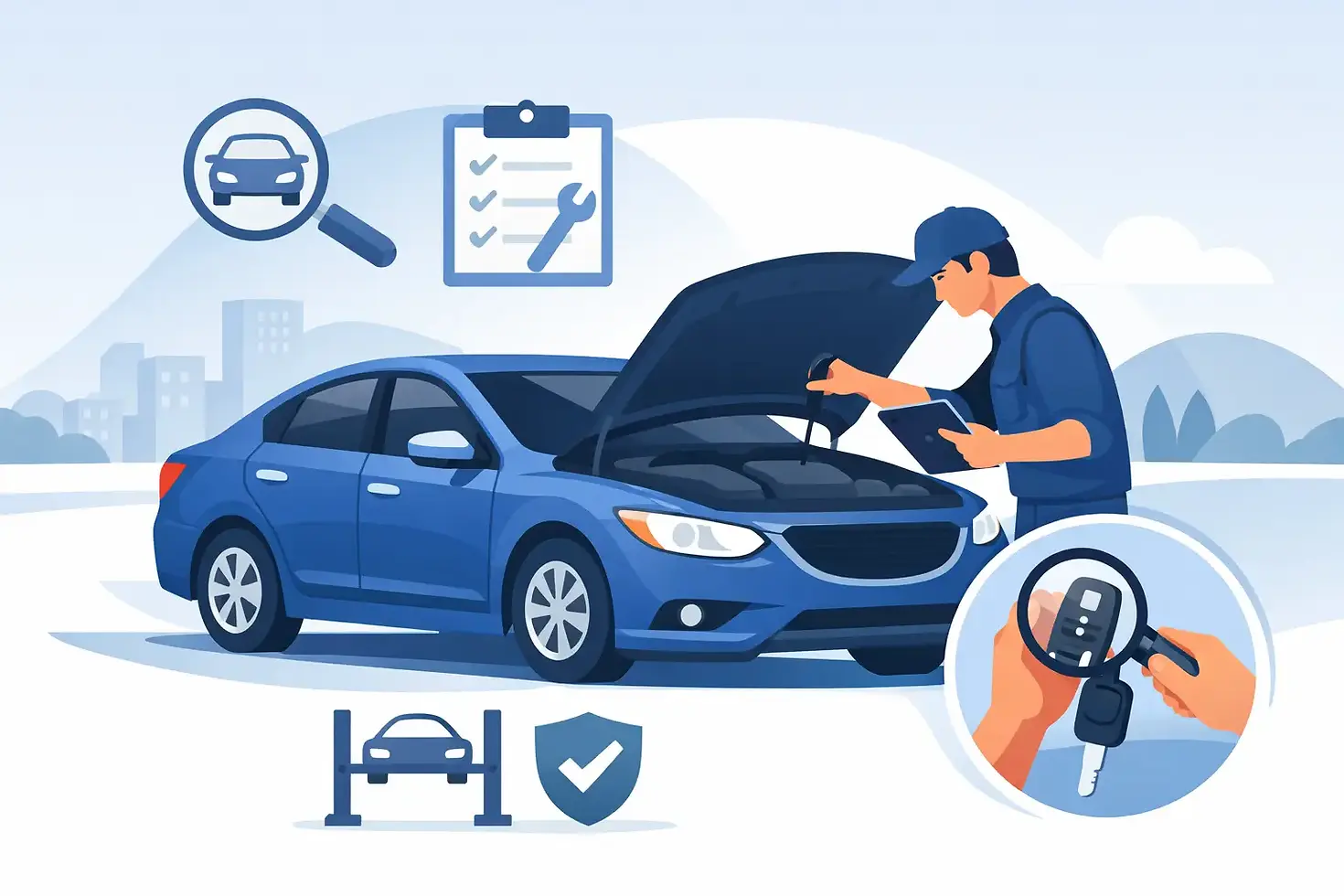
Pre Purchase Car Inspection Guide
That cheap used car can get expensive fast if the problems are hiding underneath a shiny wash and a quick vacuum. A proper pre purchase car inspection guide helps you slow down, check the right things, and avoid buying someone else’s headache.
When you’re looking at a second-hand car, ute or 4x4, the goal is simple - find out whether it’s been looked after, whether it’s safe, and whether the asking price matches its actual condition. Some issues are minor and manageable. Others can cost thousands not long after you hand over the money.
Why a pre purchase car inspection guide matters
A used vehicle can look tidy on the surface and still have worn suspension, oil leaks, cooling system problems, accident damage or electrical faults. Sellers do not always know what is wrong, and some absolutely do. That is why a pre purchase inspection is less about suspicion and more about common sense.
For most buyers, the biggest risk is not the obvious damage. It is the hidden wear that shows up after a week of commuting, towing, school runs or worksite driving. A vehicle might start and idle fine in a driveway, then overheat in traffic, shudder under load, or chew through tyres because of steering or suspension issues.
If you are buying for practical reasons, downtime matters as much as purchase price. Tradies, families and anyone who relies on their vehicle every day need to know whether they are buying transport or buying repairs.
Start with the paperwork before you inspect the car
Before you even look closely at the vehicle, ask about service history, registration details and whether the seller has receipts for recent work. A stamped logbook is useful, but receipts are often more telling because they show what has actually been repaired or replaced.
Pay attention to gaps in servicing, especially on diesel vehicles, 4x4s and higher kilometre cars. Missing history does not automatically make a car a bad buy, but it does increase the risk. If the seller says it has always been serviced and there is nothing to prove it, treat that claim carefully.
You should also confirm the VIN and engine number match the paperwork. If anything does not line up, stop there until it does. It is not worth taking chances.
What to check in a used car inspection
Body and paint
Walk around the vehicle slowly and look at it in full daylight if possible. Check for uneven panel gaps, paint overspray, mismatched paint colour and signs of repaired damage around the doors, guards, tailgate and roofline. These do not always mean the car is unsafe, but they can point to previous accident repairs.
Surface scratches and small dents are normal for used vehicles. What matters more is whether there is structural damage, rust, or evidence the vehicle has had a hard life. Rust around door sills, wheel arches, under the windscreen or in the boot area is worth taking seriously.
Tyres and suspension
Tyres tell you a lot. Uneven tyre wear can point to poor wheel alignment, worn suspension components or accident damage. If one edge is badly worn, there is usually a reason.
Push down on each corner of the car and see how it settles. Excessive bouncing can suggest worn shocks. During a test drive, listen for knocks over bumps and pay attention if the vehicle pulls to one side.
Engine bay
Open the bonnet and look for oil leaks, coolant stains, cracked hoses, damaged wiring and obvious signs of neglected maintenance. Check fluid condition where possible. Milky residue in oil can be a warning sign, just as oily residue in the cooling system can be.
A clean engine bay is not always good news. Sometimes it has simply been cleaned for presentation. That is why you need to look for fresh leaks after the test drive as well.
Under the vehicle
If you can safely look underneath, check for fluid leaks, rust, damage to exhaust components and signs the vehicle has been grounded or hit underneath. This matters even more for 4x4s and utes that may have seen off-road use or towing work.
Fresh oil around the engine, gearbox or diff does not always mean immediate failure, but it should affect your decision and the price you are willing to pay.
Interior and electrical items
Inside the cabin, test everything you reasonably can - air conditioning, power windows, central locking, infotainment, lights, indicators and wipers. Electrical faults can be time-consuming and expensive to trace.
Also look at seat wear, pedal rubber and steering wheel condition. If a car shows very low kilometres but the interior is heavily worn, ask questions. Excessive wear can suggest the odometer reading does not tell the full story.
The test drive is where problems often show up
A short drive around the block is better than nothing, but it is not enough if you can avoid it. Drive the vehicle at low speed, suburban speed and, if possible, on a faster road. You want to see how it behaves cold, warm, under braking and through gear changes.
Listen for rattles, knocks, whining, grinding or clunks. Feel for hesitation, slipping transmission shifts, harsh changes, steering vibration and brake shudder. Watch the temperature gauge and make sure no warning lights appear during or after the drive.
If the seller has warmed the car up before you arrive, that can hide cold start issues. Ask for the engine to be cold when you inspect it if possible. Cold starts can reveal smoke, rattles and battery or ignition issues that disappear once the vehicle is warm.
A pre purchase car inspection guide for 4x4s, diesels and work vehicles
Not every used vehicle has the same risk profile. A small hatch used for city driving has different weak points from a diesel ute, a touring 4x4 or a light truck.
With 4x4s, check for signs of serious off-road use, underbody damage, suspension modifications, diff leaks and worn driveline components. Lift kits and accessories are not automatically a problem, but poor-quality modifications can create more trouble than value.
With diesels, pay close attention to injector issues, excessive smoke, turbo performance, oil leaks and service history. Modern diesels can be excellent, but if they have been poorly maintained, repair bills can escalate quickly.
With work vehicles, think beyond cosmetics. Scratches in the tray or cabin wear are less important than mechanical condition, cooling system health and whether the vehicle can reliably handle daily load and distance.
When a professional inspection is the smarter move
A buyer can do a useful basic check, but a trained mechanic will pick up more. That is especially true if you are buying from a private seller, buying interstate, looking at a higher kilometre vehicle, or choosing a model known for expensive faults.
A professional inspection helps because it is detached from the sale. There is no emotional rush, no pressure from the seller, and no guessing about whether that small noise is normal or not. You get a clearer picture of what needs attention now, what may need doing soon, and whether the car is worth the asking price.
For buyers across the Gold Coast and Brisbane, a mobile mechanic can make this even easier because the inspection can often be carried out where the vehicle is located. That saves time and gives you practical, plain-English feedback before you commit.
Red flags that should make you pause
Some faults are negotiable. Some are a sign to walk away. Be cautious if the seller avoids questions, rushes the sale, cannot explain missing history, or refuses an inspection. The same goes for warning lights on the dash, obvious overheating signs, major leaks, strong transmission issues or signs of crash repairs that have not been properly disclosed.
Price matters too. If a vehicle is much cheaper than comparable ones, there is usually a reason. Sometimes you can buy well by accepting minor cosmetic faults. But if the discount is there because the mechanical condition is poor, it is rarely a bargain.
How to use inspection results in the real world
An inspection does not always end with yes or no. Often the answer is it depends. A used car can still be worth buying if it needs tyres, brakes or a battery soon, as long as the price reflects that and the rest of the vehicle is sound.
Where buyers get caught is ignoring stacked costs. Tyres, brakes, suspension work, a service, cooling system repairs and registration issues can turn a decent-looking buy into a very average one. Add those costs up before you agree on a price.
If the inspection shows only minor issues, you have peace of mind. If it shows bigger problems, you can either negotiate properly or move on without regret. Both outcomes are useful.
Buying second-hand does not have to be a gamble. Take your time, ask direct questions, and get the vehicle checked properly before money changes hands. A careful inspection today is a lot cheaper than finding out the hard way next week.


Comments